


Thought Map: Structured Problem Solving from Hypothesis to Root Cause
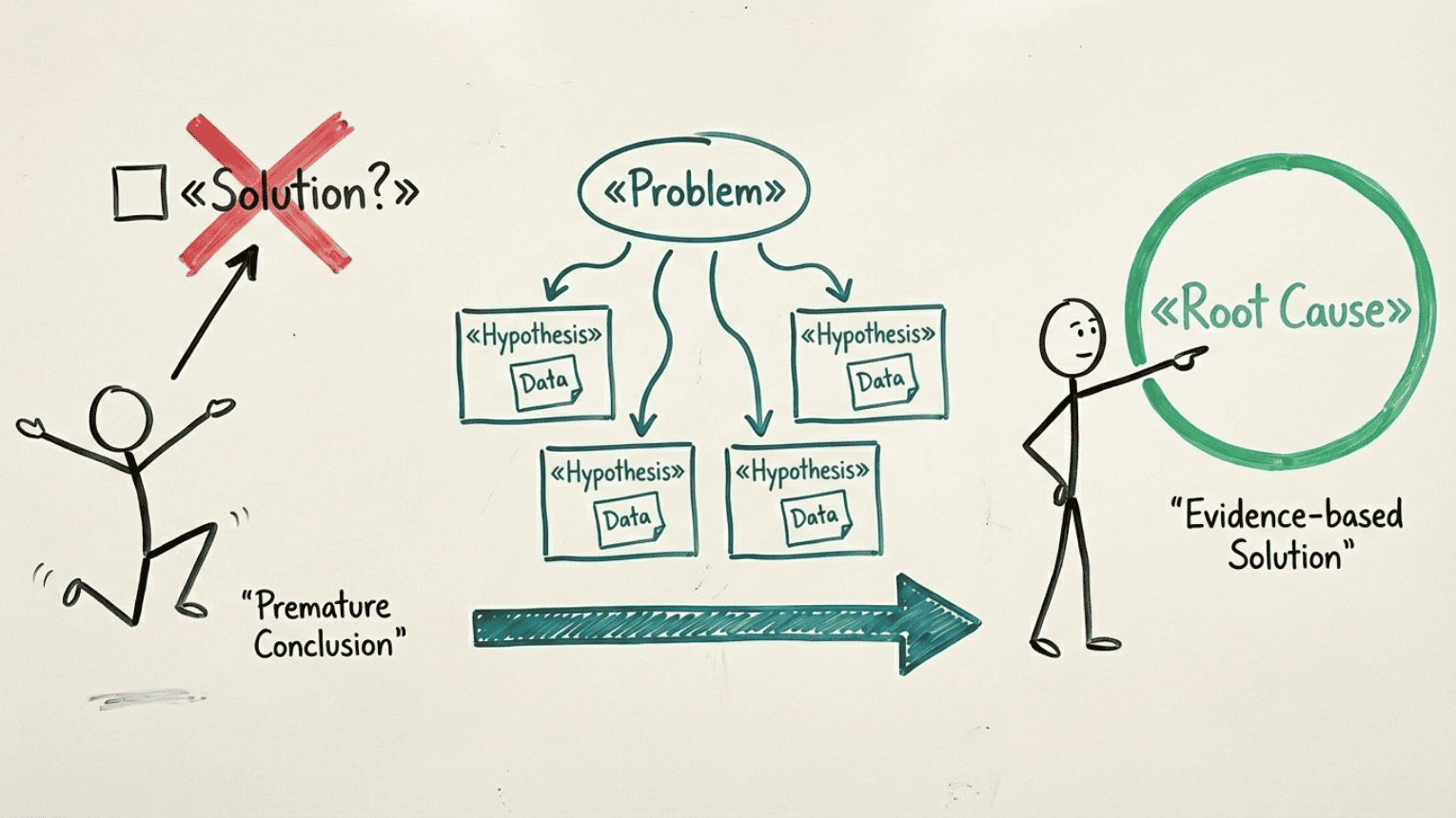
Your brain searches for answers to the questions you ask. Ask the wrong questions, and you'll keep solving the wrong problems.
I came across something that stuck with me.
The brain works like a search engine — it finds answers to whatever question you put in. The problem is that many of the questions we ask ourselves are unconscious, and they send us in completely the wrong direction.
Consider the difference between these two:
"Why does this always happen to me at work?", versus
"What can I learn from this?"
Same situation. Completely different answers from the brain.
The same principle applies when you use AI tools. The quality of your prompt determines the quality of the answer you get. And it applies just as much on the production floor when your team is asking questions in the middle of a crisis.
In brief
Situation: Most people jump straight from problem to solution without asking questions along the way. The brain concludes quickly and misses other possibilities.
Insight: A Thought Map forces you to ask the questions that challenge the conclusions you've already jumped to. It changes which solutions you find.
Signs to watch for: Solutions that don't last, problems that keep coming back, and teams debating who is to blame instead of what is causing the problem.
Next step: Use a Thought Map as a structured tool to connect problem, hypotheses, data, and conclusions in an iterative process.
When the question was wrong
Over 20 years ago, I learned a method at Sigma Science called the Thought Map. The idea was to use questions, data, analysis, and conclusions in an iterative process — until you had the answers you needed to implement effective solutions.
Since then, I've used Thought Maps to coach others through their problem-solving. And one pattern stands out:
People jump from goal to solution without asking any questions in between.
I once ran a course for unemployed people, teaching them to use Thought Maps to structure their path toward a goal. The goal was clear: find a job.
Their Thought Maps filled up with relevant facts. Education. Experience. Network. Skills. But there were no actions at all. What were they actually going to do?
I changed the starting question:
"What can I DO to reach my goal?"
Everything changed. The Thought Map went from zero actions to many concrete steps. Same tool. Different question. Completely different result.
What this taught me
What this is about: A Thought Map is a structured tool for connecting problem, hypotheses, data, and conclusions. It is not a list of solutions. It is a process for finding the right questions.
Why it happens: The brain jumps quickly to solutions. It feels efficient, but it often means we conclude before we've asked the right questions. A Thought Map works against this by opening up multiple hypotheses and requiring evidence-based analysis before you draw any conclusions about root cause.
How you recognize it:
• The same problem comes back after you "fixed" it.
• A solution doesn't deliver the improvement you expected.
• The team debates who is to blame, not what is causing the problem.
• Process adjustments are based on gut feeling, not data.
• New actions are implemented without anyone defining what success looks like.
How a Thought Map works in practice
A Thought Map is a living document. It starts with a problem or an opportunity, and continues through hypotheses, facts, and analysis in an iterative process.
Here are three examples of Thought Maps in use:
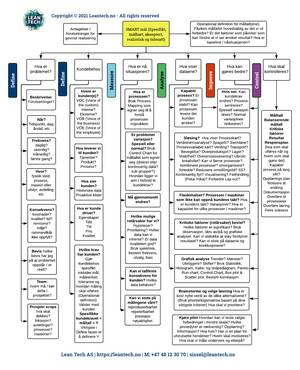
Thought Map for DMAIC:
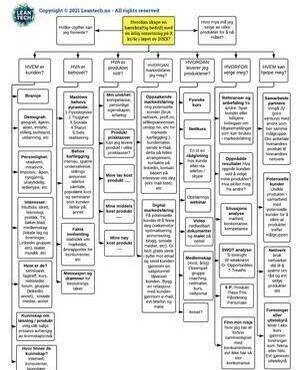
Thought Map for Time Management:
Thought Map for Delivery Performance:
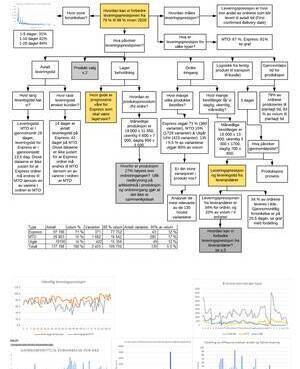
A Thought Map works like a navigator because it shows multiple possible paths to the goal. Sometimes we hit dead ends, and the tool helps us find our way back on track.
The key is to ask many questions, stay open, and explore several possibilities - not just the first solution that comes to mind.
The Thought Map model
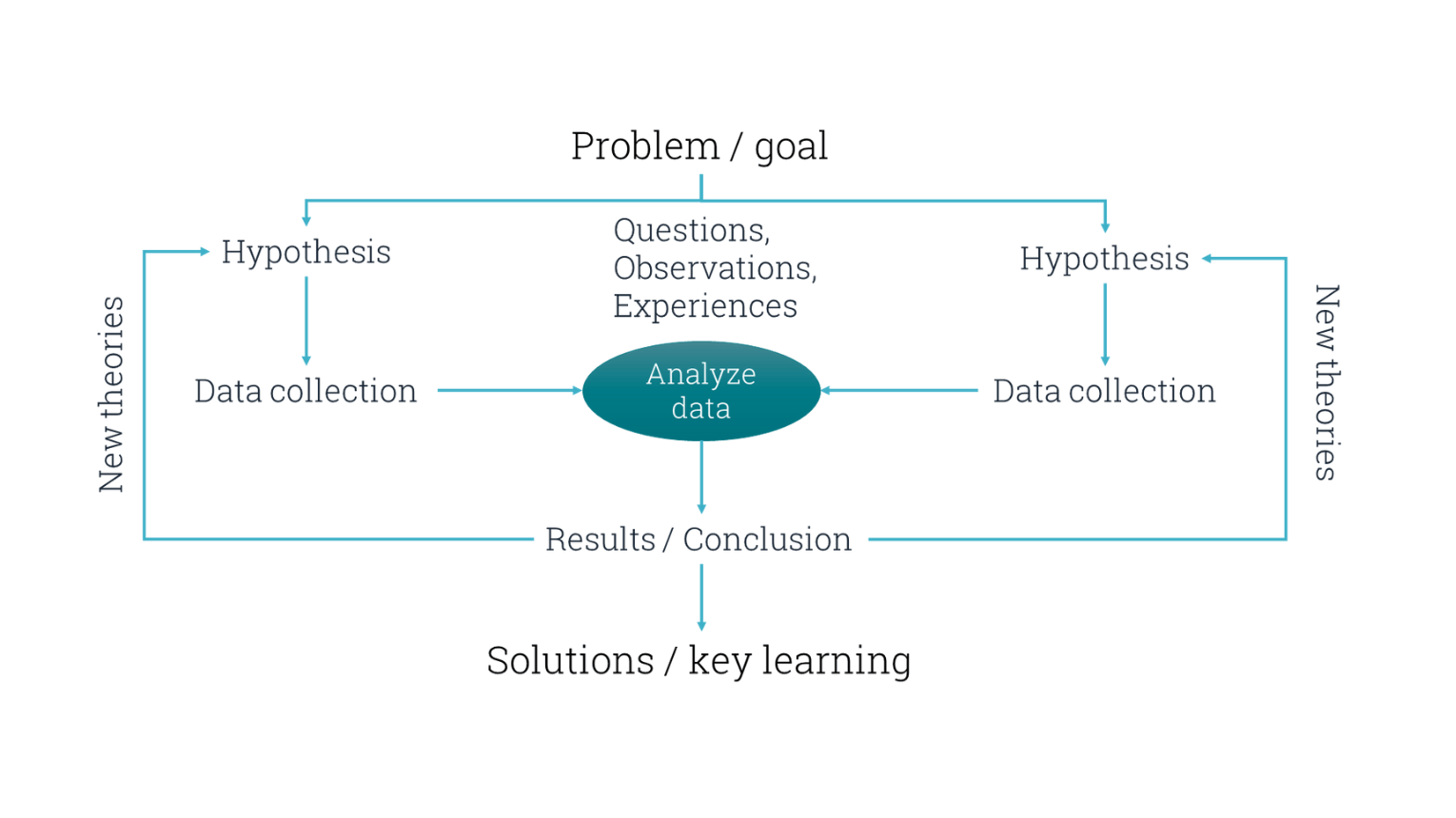
The model starts with a problem or an opportunity based on observations and experience. From there, you formulate hypotheses about possible causes.
To test the hypotheses, you need facts and data. Collecting and analysing data provides the basis for further decisions and adjustments.
Problem solving is an iterative process. Hypotheses are adjusted and new solutions tested as needed. You're done when the data confirms that you've found the root causes and implemented targeted actions that hold over time.
Does this sound familiar?
You may recognise this pattern in your own day-to-day work:
• The team asks "who messed this up?" instead of "what is the process telling us?"
• A fix gets implemented because it "always worked before," without checking whether it addresses the actual cause this time.
• Deviations get escalated to management because no one has the tools to analyse what is actually happening.
• The same problem gets solved three times in a year, and no one asks why it keeps coming back.
• The process gets adjusted based on a single deviation that turns out to be normal variation - and variation increases as a result.
Wrong questions lead to wrong focus. And wrong focus leads to firefighting, not root cause work.
How to get started
Step 1: Start with the question, not the solution
The next time a problem comes up, resist the urge to go straight to action. Write down the problem and ask: "What do we know, and what do we need to find out?"
Step 2: Build the Thought Map with hypotheses
Write down possible causes as hypotheses, not as facts. Start with sticky notes and flip chart paper. Involve the people who know the problem. An operator who has worked a process for five years often knows more than what shows up in the deviation report.
Step 3: Test the hypotheses with data
For each hypothesis, ask: "What data would confirm or rule this out?" Collect data with a specific purpose. Not all data - just what is relevant for the hypothesis you are testing.
Step 4: Iterate until you find the root cause
Adjust hypotheses based on what the data shows. A dead end is not a failure - it is information. Continue until your conclusion is supported by facts.
Frequently asked questions
What is the difference between a Thought Map and a Root Cause Analysis?
A Thought Map is a broader process that includes hypotheses, data collection, and iteration. Root cause analysis is one of the tools you can use within the Thought Map process to go deeper on a specific cause.
Is a Thought Map a tool for leaders, or can the whole team use it?
It works best when used by the team together. Operators know the process, team leaders know the system, and the Thought Map gives everyone a shared language for discussing causes and solutions - without it turning into a blame game.
What is the most common mistake people make with Thought Maps?
They fill it with solutions instead of questions and hypotheses. A Thought Map that only contains actions is not a Thought Map - it is an action plan. Always start with the problem and the hypotheses about causes.
How long does it take to build a Thought Map?
The most important thing is to start, not to build the perfect map. A first version can be done in 20 minutes with sticky notes. From there, it gets updated continuously as new information comes in.
Want more stories about problem solving?
This story is from our weekly newsletter, where we share experiences. Short stories for those who want to solve problems at the root and achieve measurable, lasting value.
Sign up for our newsletter:
If you want to learn more about the topics in this post:
• Do you know the difference between firefighting and prevention?
• Root cause analysis: from treating symptoms to lasting results
• Shared focus first: the underrated step in problem solving
Assignments
Contact info
Lean Tech AS | Kristoffer Robins vei 13
0047 481 23 070
Oslo, Norway
Lean
L - Look for solutions
E – Enthusiastic
A – Analytical
N - Never give up