




I was very impressed with Sissel's Lean Six Sigma knowledge. She makes it easy to identify improvements and create results.

Daryl Powell
Research Manager, Sintef Manufacturing
A client asked for root cause analysis training, but really wanted to get better at firefighting.
I received a request to deliver a root cause analysis course. For project managers in a large organization.
Seemed straightforward. We booked a meeting to understand their needs.
As usual, I started with the questions I always ask: "What's the goal? What does success look like?"
The answer surprised me.
"What do YOU perceive as our need?"
That wasn't what I expected. I tried to dig deeper. Asked more questions. Tried to understand what they actually wanted to achieve.
They said:
"We don't want to become experts in root cause analysis."
"We want to achieve a culture change."
"We're not that concerned about it being measurable."
I suggested measurable success criteria. Concrete ways to know if the course had an effect.
That wasn't well received.
And that's when I started to sense this was about something else entirely.
Situation: An organization asked for root cause analysis training, but couldn't define what success meant for them.
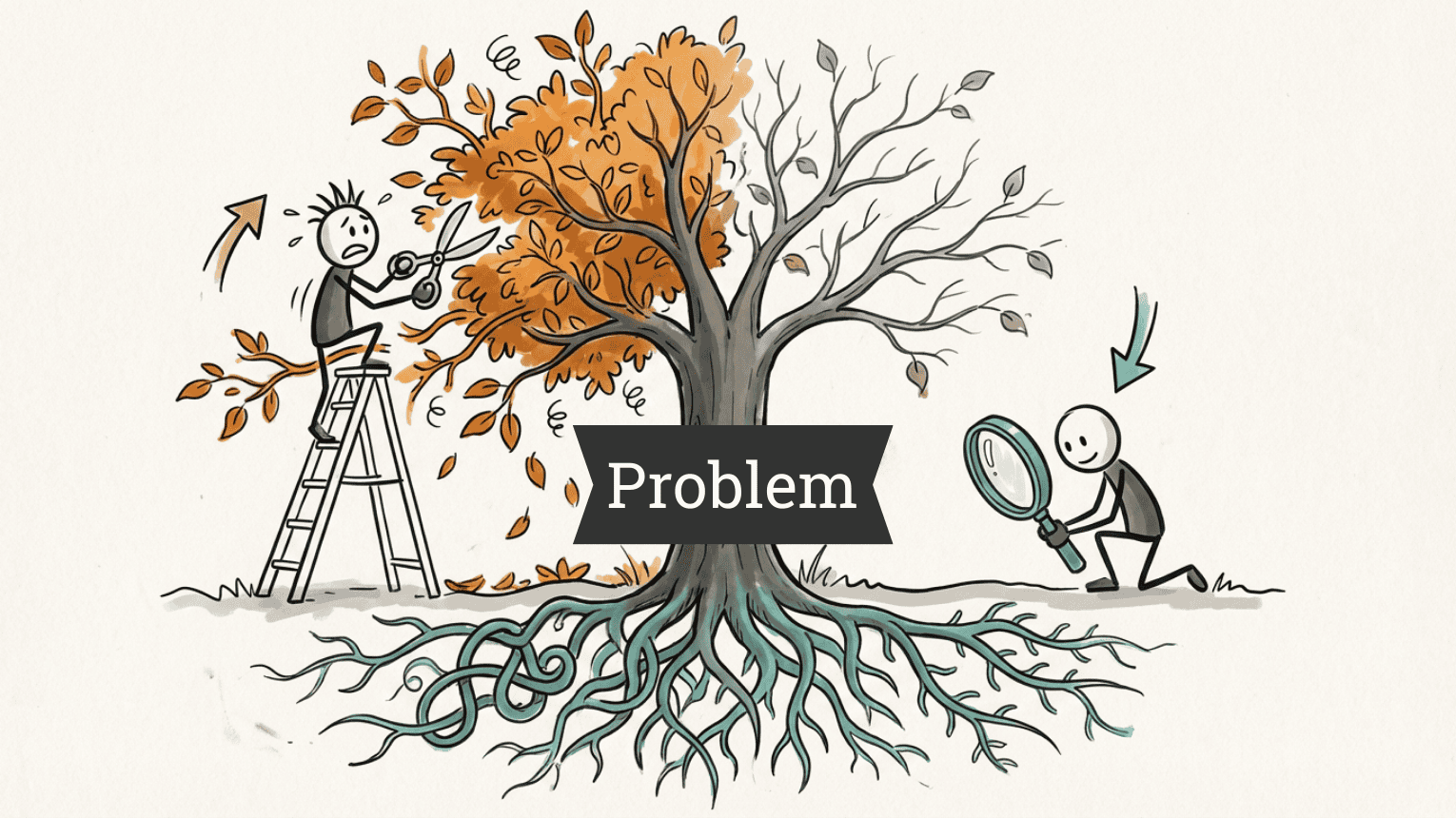
Insight: What they described was symptom treatment, not root cause work. "Hit the brakes earlier" and "raise the red flag faster" is about firefighting, not prevention.
Signs to watch for: Resistance to measurable success criteria, focus on faster reaction rather than fewer problems, words like "culture change" without concrete content.
Next step: Define what "good" looks like before you invest in initiatives.
As the conversation continued, I discovered something interesting. They weren't really concerned about root causes. Or working preventively.
What they described was:
"Hit the brakes earlier."
"Raise the red flag faster."
To me, this sounded like:
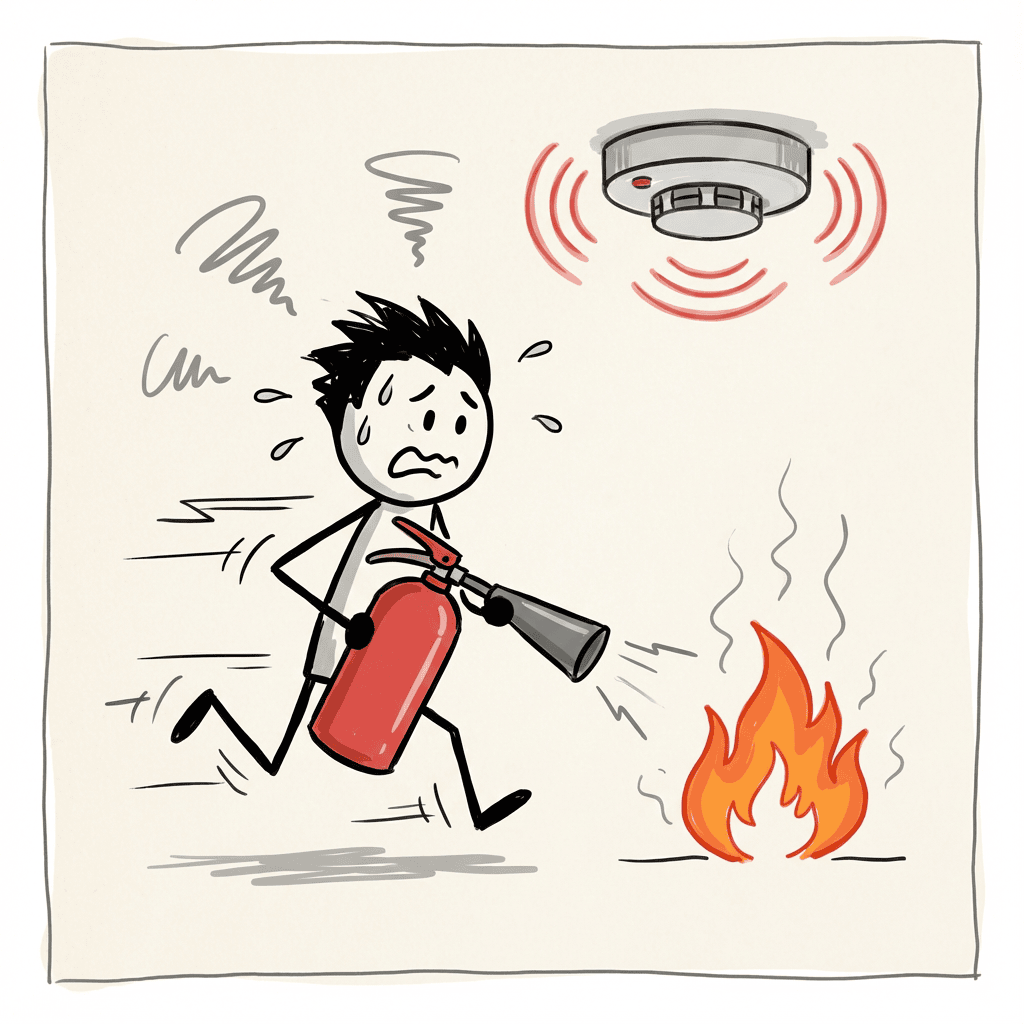
"We want to get better at firefighting. We want to detect the fire earlier."
Not: "We want to prevent the fire from starting."
They asked for root cause analysis training, but really wanted more effective firefighting. They just weren't aware of it themselves.
What this is about: Unclear goals are goals that lack a concrete definition of "good" and a measurable way to know if you're moving in the right direction.
Why it happens: Unclear goals feel safer. If the goal is "culture change," no one can say you failed. If the goal is "reduce deviations by 30%," success or failure is obvious. Measurable goals require accountability, and that feels vulnerable.
How you recognize it:
• Resistance when you suggest concrete success criteria
• Words like "better," "smarter," or "culture change" without numbers
• Focus on reacting faster, not on preventing
• Reports that count problems solved, not problems prevented
If you don't know what "good" looks like, it's hard to imagine it. And even harder to get there.
Here's the uncomfortable truth:
Unclear goals are safer. "Culture change" sounds ambitious, but no one can measure if you succeeded. "Reduce recurring deviations by 40%" is concrete, and risky.
Measurable goals require accountability. When you put numbers on the table, someone can ask if you reached them. That feels exposing.
We think we know what we want. "Better at root cause analysis" sounds sensible. But what does it mean? Fewer recurring problems? Shorter downtime? Lower costs? Better learning across teams?
The organization I met hadn't defined any of these. And they didn't realize that what they described, faster reaction, was symptom treatment, not root cause work.
The consequence is that you invest time and money in initiatives that may not solve the actual problem.
Maybe you're not planning root cause analysis training right now. But I bet you recognize the dynamic:
• Leadership says "we need to get better at continuous improvement," but no one defines what that means concretely
• Your team is told to "work smarter," but no one explains what "smarter" looks like
• You set goals for "increased efficiency" or "better quality," without measuring where you're starting from
• Monthly reports focus on how many problems you solved, not how many you prevented
• New initiatives are implemented without anyone defining success criteria upfront
The result? You work hard. You take initiative. You implement actions. But you don't know if you're moving in the right direction, because you never defined what "right direction" was.
Step 1: Ask "what's the goal?" before you start
Next time someone proposes an initiative, don't accept "we need to get better" as an answer. Ask: Better at what? How do we measure "better"? What's the difference between OK and really good?
Step 2: Define what "good" looks like BEFORE you invest
If the goal is "fewer deviations," what's the baseline? What's acceptable? What's ambitious? Put the number on the table before you begin. Otherwise you won't know if the initiative worked.
Step 3: Distinguish between symptoms and causes in your goals
"Detect problems faster" = symptom treatment. "Reduce the number of recurring problems" = root cause work. The difference is critical for which actions actually help.
What's the difference between firefighting and prevention?
Firefighting is about reacting quickly when problems occur. Prevention is about removing the causes so problems don't occur in the first place. Both have value, but many organizations invest heavily in firefighting and believe they're doing prevention.
Why are measurable goals important?
Without measurable goals, you don't know if you're moving forward. You can spend resources on initiatives that feel productive but don't deliver actual results. Measurable goals provide direction and the ability to adjust course.
How do I know if my goals are clear enough?
Test it: Can two people in your organization independently say whether you've reached the goal? If the answer is no, the goal is too vague.
What do I do if leadership doesn't want measurable goals?
Start by understanding why. Often it's about fear of being measured on something they can't control. Suggest starting with one small, contained goal they can directly influence. Show that measurability provides insight, not just judgment.
This story is from our weekly newsletter, where we share experiences. Short stories for those who want to solve problems at the root and achieve measurable, lasting value creation.
Sign up for our newsletter:
If you want to learn more about the topics in this post:
• Learn the DMAIC methodology from Define to Control
• How to find root causes instead of treating symptoms
• Understand the difference between noise and signal with statistical process control
I was very impressed with Sissel's Lean Six Sigma knowledge. She makes it easy to identify improvements and create results.
Very nice and professional service. Delivered a good job within deadlines.
Sissel's commitment and expertise is impressive. Her contribution to our monitoring program has been precise and targeted, as well as very educational.
We are very happy with the work carried out; with your background and expertise, the outcome was what we were looking for.
Sissel is a competent and committed employee. She has been an important contributor to ensure progress. At the same time, she is accurate and deliveres good quality work.
Lean Tech delivered monitoring program for air emission. The assignment was delivered with the correct content at the right time. Recommended.
Very engaged and focused throughout the course. Sticking to the agenda. Nice and pleasant.
Very good at keeping the right atmosphere, and at driving the participation from all the attendees.
Supply Chain & Automation Manager
"You are inspiring, positive and professionally skilled" "Made a difference, engaged and skilled"
"Inspiring, motivating and patient. Managed to adjust the subject to our level."
"Very knowledgeable. Good answers to all input."
"Excellent! Very clever and engaging"
"Great and fun with the Lego competition."
"Very good! Lots of knowledge and good at communicating."
"Good mix of theory and practice. Fun to try out what you've learned."
Very useful with practical implementation and approach, and that we could relate / transfer to our own workplace.
Inspiring, professionally competent, popularize a theoretical discipline.
Clear and well presented. Good at asking questions and listen (check understanding).
Academic highly skilled and clear performance. Fun and builds trust.
Lean Tech AS | Kristoffer Robins vei 13
0047 481 23 070
Oslo, Norway
L - Look for solutions
E – Enthusiastic
A – Analytical
N - Never give up


